


DFTC Just Became the AI Trust Layer for Global Security
- Checkers

- Apr 22
- 4 min read
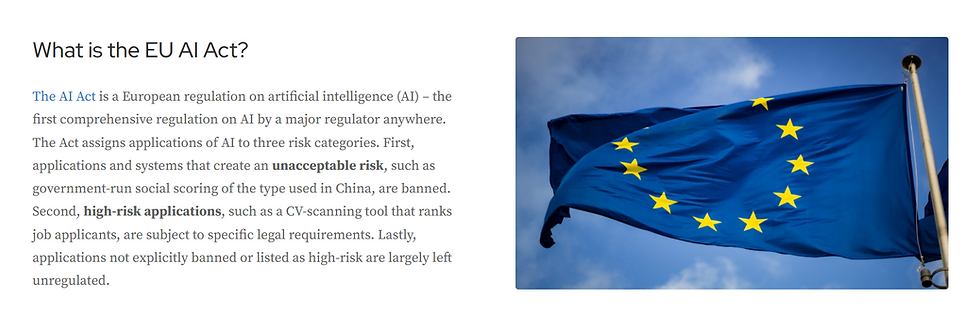
Defentect Group, Inc. (OTCID: $DFTC) has been quiet for over a year, and in the last seven days the company has signed two licensing deals that reposition it from a legacy sensor-integration vendor into the first AI-verified emergency response platform on the market. In every control room running enterprise AI, the models hallucinate and the expert systems contradict each other, and nobody can actually tell whether the answer on the screen is right until something either works or goes very wrong. That problem has already produced the first wave of premium-priced acquisitions in the AI governance category, and the EU AI Act's high-risk enforcement obligations are about to pour a lot more fuel on the fire.
The first of DFTC's two agreements, signed April 14 with Paris-based Blue Connect Solutions, licenses the SmartBoitier industrial IoT platform across North America, and the second, signed April 21, gives DFTC worldwide rights to Kyvoo's AI verification technology, pairing its existing DM3 emergency response platform with AI-powered sensor analytics and a trust layer that verifies what the AI actually concludes before any response is triggered.
DM3 is DFTC's proprietary software that turns sensor alerts into real-world emergency responses, and it has been the anchor of the company's offering for years, with prior installations at federal facilities, hospitals, and university campuses. The platform reads signals from intrusion sensors, environmental monitors, radiation detectors, and other threat indicators, coordinates the response workflow, and routes event-specific alerts out to the phones, desktops, and pagers of the people who need to act on them. Blue Connect's SmartBoitier plugs into that architecture as an AI-powered data layer for the kind of complex, distributed facilities where operational data has historically been trapped in proprietary systems that do not talk to each other, and it brings a platform already running in Europe into the North American market.
Kyvoo Assist is the piece that sets the combined offering apart from anything else in emergency notification. It sits on top of AI-driven expert systems and verifies the conclusions those systems produce, so that when an AI flags an anomaly in a security network the operator gets a vetted, accountable answer rather than a raw model output. CEO James Ackerly framed the Kyvoo deal as a milestone in the platform's evolution in the April 21 release, adding that DM3, SmartBoitier, and Kyvoo Assist together deliver a more scalable solution for enterprise, industrial, and municipal customers now backed by the confidence of a trustworthy result. Kyvoo President Richard Wilson put the logic of the verification layer more bluntly, noting that physical security is no place for errors and that operators need to be able to trust and act on AI-derived conclusions with confidence. None of the majors in emergency notification, whether Everbridge, OnSolve, or Rave Mobile Safety, have paired their AI features with a dedicated verification layer that audits model output before an alert fires.
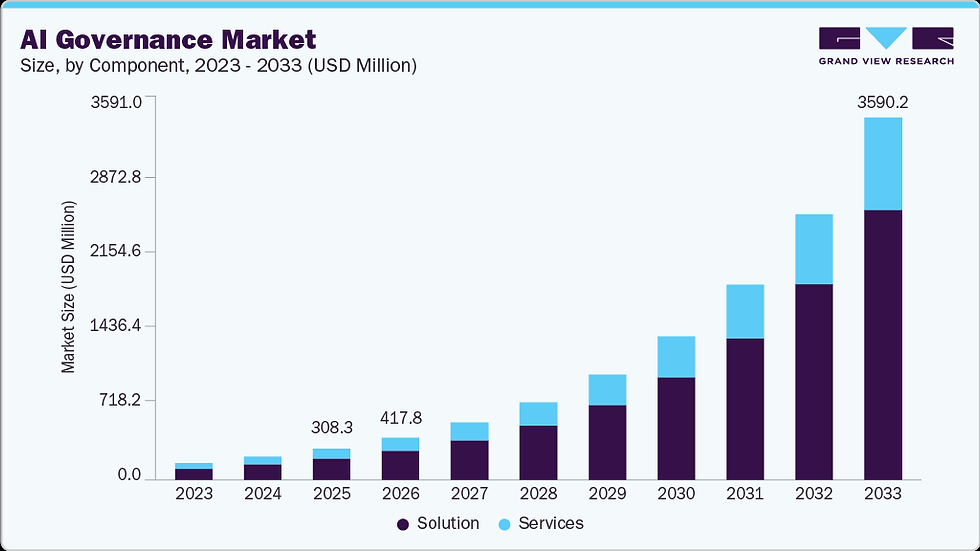
Grand View Research projects the AI governance market at roughly $420 million in 2026 and $3.59 billion by 2033, a 36.0% CAGR driven by regulation pushing enterprises to prove their AI outputs are consistent and auditable, with EU fines reaching €35 million or 7% of global revenue under the AI Act and parallel pressure building from NIST and state-level laws in the US. Physical security operators running AI-enabled sensor networks are the single cleanest customer profile for a verification layer, because a wrong answer in physical security creates real legal liability.
Cisco (NASDAQ: $CSCO) acquired AI governance firm Robust Intelligence in October 2024 for roughly $400 million, F5 Networks (NASDAQ: $FFIV) acquired CalypsoAI a year later for $180 million, and Thoma Bravo took Everbridge private in July 2024 at $1.8 billion on roughly $440 million in revenue for a price near 4x its annual revenue. The public comparables in AI-enabled physical security sit in the same zone, with Evolv Technology (NASDAQ: $EVLV) carrying a roughly $1.19 billion market cap on $146 million in 2025 revenue and BigBear.ai (NYSE: $BBAI) carrying a roughly $1.8 billion cap on $128 million in 2025 revenue, a group running at anywhere from 4x to 13x sales across the major exchanges. None of them have paired an AI-verified alerting pipeline with a real-world DM3-scale install base of federal, healthcare, and higher-education deployments.
DFTC hit a fresh 52-week high of $0.0903 on the back of the Kyvoo announcement, a move that still leaves the company at a market capitalization of only $7.5 million against a comp set that runs into the billions, even as it has assembled the building blocks of a full AI-era physical security platform in seven days. Ackerly called the Kyvoo deal "another milestone in the evolution of our platform roadmap and growth strategy," and the pace of moves over the last week leaves little reason to doubt there is more already in the pipeline. DM3 has a history of named deployments at federal facilities, hospitals, and university campuses, and the obvious next phase of the story is that same pattern repeating with AI and verification now in the pitch.
Disclaimer: Mt. Zion Market Ventures has received compensation for the creation and dissemination of this article. For more information, please visit opendisclose.com. The information provided here is not intended to be a comprehensive analysis of the subjects mentioned. All information, opinions, and forecasts contained herein should not be construed as investment advice, a recommendation, or an offer to buy or sell any securities or related financial instruments. Investors should conduct their own research or consult with a qualified financial advisor before making any investment decisions. The author and publisher of this content are not responsible for any losses, damages, or other consequences that may result from the use of the information provided. Investing in stocks, including those mentioned here, involves risks, including the risk of loss.


